
 Español
  English
  Français
  Deutsch
 Pomeranian
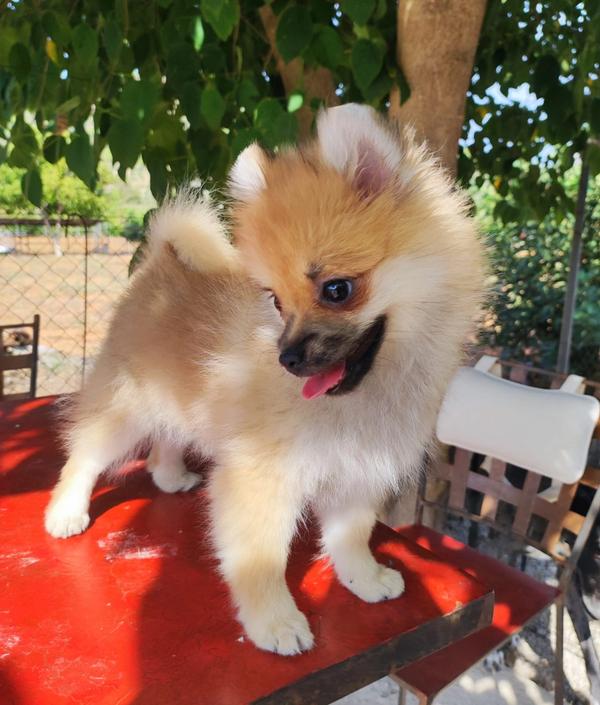
Discover the Pomeranian at Criadero 4Patas: a small, lively dog with a luxurious double coat and an irresistible character. Perfect for families, city flats and anyone looking for a loyal companion full of energy.
Technical sheet
Ratings
Temperament
The Pomeranian is a lively, alert dog that bonds very closely with its family. Beneath its plush-toy appearance lies a determined temperament — a direct inheritance from the German Spitz it descends from: watchful, vocal as an alert barker, and self-assured. This breed lives its bond with its caregivers intensely, making it ideal for families with older children who understand its physical fragility, as well as for seniors in an urban setting looking for a small, affectionate and active companion. It learns quickly and responds well to positive reinforcement, though it may be reserved with strangers if not socialised from puppyhood. Its vigilant nature makes it an excellent watchdog in a flat.
Care
The Pomeranian requires consistent care of its dense double coat. We recommend brushing two to three times a week with a long-bristle brush and comb to prevent mats, increasing the frequency during the two seasonal shedding periods each year. Bathing is spaced every four to six weeks with a shampoo formulated for double coats; clipping the coat short is not recommended as it damages the coat structure. Nails should be trimmed every three to four weeks and ears checked weekly. The breed's teeth tend to accumulate tartar, so brushing two to three times a week from puppyhood is advisable. At our kennel in Dénia we accustom puppies to brushing, gentle bathing, and handling of paws and ears from five weeks of age, so the transition to their new home is stress-free.
Adult size
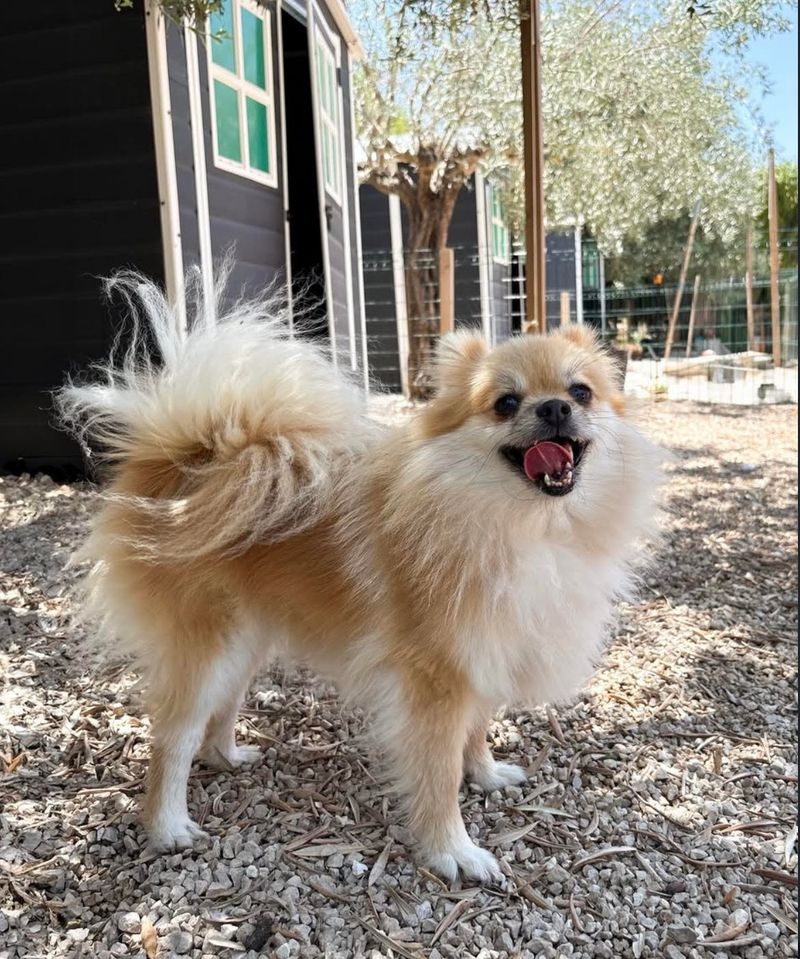
The Pomeranian is the miniature variety of the German Spitz (Zwergspitz according to the FCI, Group 5). The official standard sets a height at the withers of between 18 and 24 cm and an approximate adult weight of 1.9 to 3.5 kg. Breed-standard specimens should not exceed four kilos; below 1.5 kg we are talking about out-of-standard specimens with higher health risks, which is why we do not breed "tea cup" lines. Recognised colours include orange, cream, black, sable, wolf and white; each litter may display different shades even among siblings.
Family life
The Pomeranian fits well with families with children over six years old, provided they are taught not to pick it up roughly and to respect its back and joints. It gets along well with other small dogs and with cats if introduced from puppyhood. It is an excellent breed for flat living due to its size and moderate activity level, although it needs two to three daily walks for socialisation and to burn off energy. We serve families in Dénia, Valencia, Alicante, Benidorm and Murcia, and many live in flats without any issues. It is advisable to work on alone-time tolerance from puppyhood and to redirect barking to prevent it from becoming a habit in the building.
History and origin
The Pomeranian descends from the German Spitz, one of the oldest European breeds, documented in the historic region of Pomerania (present-day northern Germany and Poland) as early as the 18th century. The breed gained popularity in the British court from 1888, when Queen Victoria imported specimens from Florence and contributed to reducing their size through selective breeding. The FCI classifies it in Group 5 — Spitz and primitive type dogs, section 4 — European Spitz, under the name Deutscher Spitz and the miniature variety Zwergspitz. The official standard is maintained by the Verband für Deutsche Hunde (VDH).
Nutrition
A high-quality kibble formulated for mini breeds is recommended, with animal protein as the first ingredient and a kibble size suited to its small jaw. Puppies eat three to four times daily until six months of age; adults eat twice a day. The Pomeranian is prone to hypoglycaemia as a puppy and to obesity as an adult, so portions are weighed and excessive treats and table scraps are avoided. Fresh water should always be available, especially in the Mediterranean climate.
Breed-specific health
The conditions most commonly associated with the breed are patellar luxation, tracheal collapse, Alopecia X (trunk hair loss) and dental problems caused by overcrowding. To reduce risks we use a harness instead of a collar from puppyhood, monitor weight and activity during growth, and schedule ophthalmological and cardiac check-ups at one year of age. Puppies are delivered with vaccinations and deworming up to date, an official veterinary booklet, microchip and health certificate — full details of our health protocol and guarantees can be found on the relevant page of this site.
Galería
Conoce al Pomeranian
Frequently asked questions
Everything you need to know
6 questions answered
More questions? Write to us- What special veterinary care does a Pomeranian need?
-
We recommend annual check-ups of the kneecaps, trachea, heart and teeth from puppyhood, as these are the areas with the highest incidence in the breed. Using a harness instead of a collar is mandatory to protect the trachea. Every puppy leaves our kennel with an official veterinary booklet, microchip, vaccinations and deworming up to date.
- Does a Pomeranian shed a lot?
-
Pomeranians shed heavily twice a year (spring and autumn) and moderately but constantly the rest of the time. Brushing two or three times a week controls shedding indoors and keeps the coat healthy. This is not a hypoallergenic breed: if there is an allergy to dog hair or dander in the household, it is advisable to consider another option or arrange a trial cohabitation period beforehand.
- How long does a Pomeranian live?
-
Pomeranians have a life expectancy of between 12 and 16 years, with documented cases exceeding 18. The genetics of the parents, weight management and regular dental check-ups are the three factors that most influence their longevity. A Pomeranian at a healthy weight with daily walks and frequent dental care easily reaches 14 years.
- Is a Pomeranian suitable for apartment living?
-
Yes. Pomeranians adapt very well to apartment living due to their small size and moderate activity level. They need two or three daily walks for socialisation and to relieve themselves. It is important to work on managing their alert barking — a characteristic trait of the breed — from puppyhood to avoid disturbing neighbours, and to gradually accustom them to being left alone from the first weeks at home.
- Is a Pomeranian good with children?
-
Yes, as long as children understand their fragility. We recommend cohabitation with children from six years of age onwards, who are able to understand that the dog should not be carried in their arms or dropped from height. At our kennel in Dénia, we socialise the puppy from the third week, which facilitates adaptation to the home and reduces later reactivity.
- Where to buy a Pomeranian in Dénia?
-
At our kennel in Dénia, an officially registered breeding facility with selective breeding of Pomeranians within the FCI standard. Interested families can arrange a visit via WhatsApp to meet the puppy and its parents before booking. We also serve families from Valencia, Alicante, Benidorm and Murcia, and coordinate delivery under the conditions that best ensure the puppy's welfare.
01
02
03
04
05
06
Service areas
Where we deliver Pomeranian puppies


Your new best friend is waiting
Browse our available puppies or message us on WhatsApp. We help you find the perfect companion for your family.
We respond within 24 hours ·
No obligation